Cinema History Through The Years
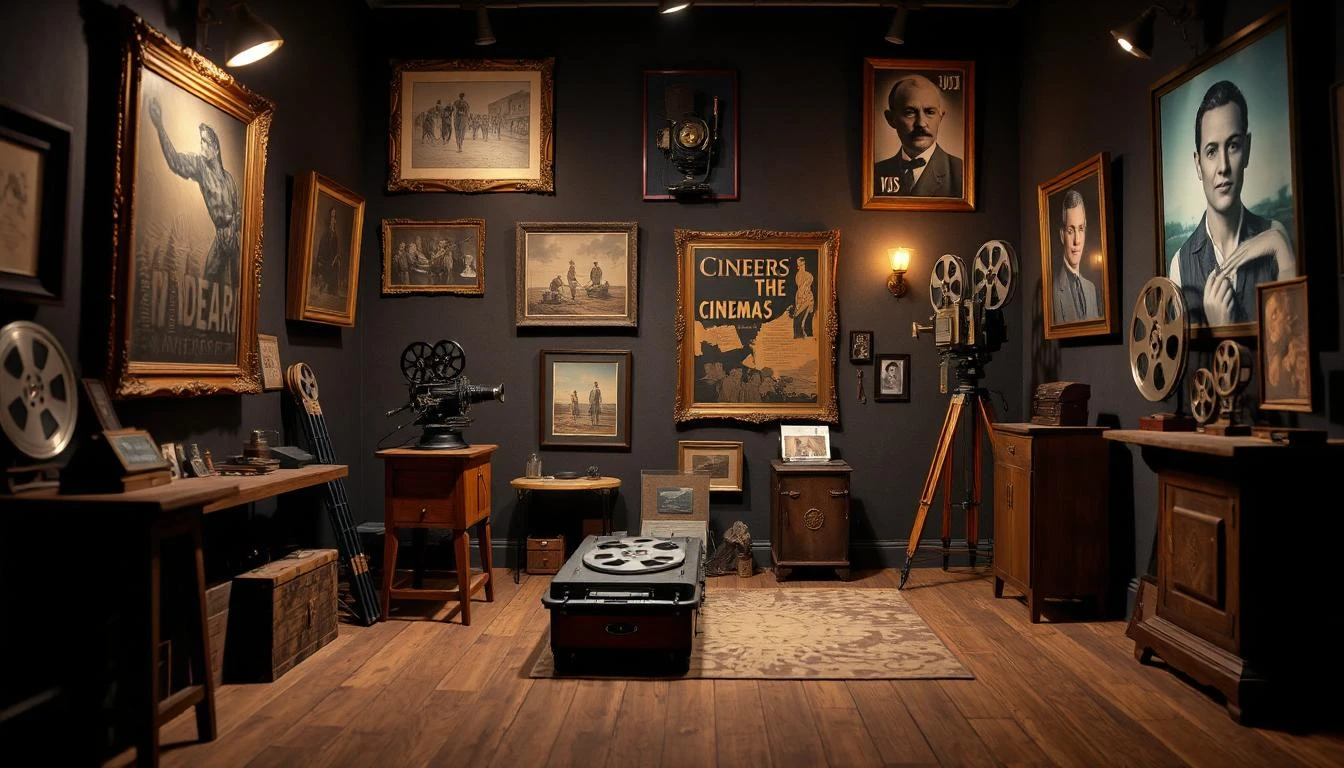
Cinema has never been just about moving images on a screen. It is a layered chronicle of human curiosity, technological breakthroughs, and emotional storytelling that continues to evolve with every decade. When you trace its development, you begin to see how deeply it mirrors society itself, its fears, dreams, and transformations.
The study of cinema history years reveals a fascinating progression where storytelling, culture, and innovation collide. From silent monochrome reels to today’s immersive digital universes, cinema has constantly reinvented itself, shaped by film evolution, classic movies, and visionary directors who pushed boundaries far beyond imagination.
Exploring The History Of Cinema
Cinema’s origin is a blend of science and art, where early experiments with motion photography eventually turned into a global storytelling language. Understanding its past helps you decode why modern films feel the way they do today.
The journey of cinema is not linear, it is fragmented, experimental, and surprisingly unpredictable, making every era a new chapter of discovery.
film evolution classic movies directors
Why cinema history remains fascinating today
Cinema history continues to captivate because it preserves raw human expression in its earliest forms. Even without sound or color, early films managed to communicate emotion with striking clarity. As film historian Kristin Thompson once noted, “Early cinema was not primitive; it was exploratory, discovering the grammar of visual storytelling.”
What makes this even more interesting is how modern filmmakers still borrow techniques from those early experiments, proving that creativity often cycles back to its roots.
The evolution of films and storytelling
Storytelling in cinema has evolved from static scenes to complex narrative structures involving nonlinear timelines and psychological depth. This transformation reflects the broader film evolution process, where technology and imagination work hand in hand.
As cinema matured, storytelling expanded into genres, symbolism, and layered narratives. Today, audiences expect not just entertainment but emotional immersion and intellectual stimulation.
Understanding important moments in filmmaking
Key breakthroughs such as synchronized sound, color cinematography, and CGI reshaped how stories are told. These milestones in cinema history years highlight how innovation continuously resets audience expectations.
Film critic Roger Ebert once remarked, “Movies are empathy machines,” emphasizing how each technological leap ultimately serves emotional connection rather than spectacle alone.
Discovering The Growth Of Film Industry
The film industry has expanded into a global ecosystem, where creativity meets commerce and technology accelerates production at an unprecedented pace. This growth reflects both cultural globalization and digital disruption.
The industry no longer belongs to one region, it is a shared creative economy driven by diverse voices.
film evolution classic movies directors
How technology changed movie production
Digital cameras, AI-assisted editing, and virtual production stages have revolutionized filmmaking. These advancements allow creators to build entire worlds without physical limitations, redefining what is possible in film evolution.
Today, even independent filmmakers can access tools that once belonged only to major studios, democratizing the art of cinema.
The influence of directors and filmmakers
Visionary directors shape how audiences interpret reality through film. Figures like Stanley Kubrick and Hayao Miyazaki crafted cinematic languages that remain influential across generations.
Their work proves that filmmaking is not just technical execution, it is a deeply personal artistic expression that shapes cultural memory.
Exploring different eras of cinema development
From the Golden Age of Hollywood to the rise of streaming platforms, each era contributes uniquely to cinema history years. The shift from theater-exclusive releases to global digital access has redefined audience behavior.
Each era introduces new storytelling expectations, reflecting how society consumes and interprets visual media.
Appreciating Classic And Modern Films
Cinema exists in a continuous dialogue between its past and present. Classic films provide structure and foundation, while modern films experiment with form and technology.
This balance keeps cinema alive, relevant, and constantly evolving.
film evolution classic movies directors
Learning from influential movie creations
Classic films remain essential study material because they reveal the fundamentals of storytelling, composition, pacing, and emotional rhythm. Many modern filmmakers revisit these works to refine their craft.
These films demonstrate that simplicity often carries the strongest emotional impact.
Understanding cultural impact of cinema
Cinema reflects societal values, political climates, and cultural identity. Through film evolution, movies become historical documents that capture the spirit of their time.
As filmmaker Akira Kurosawa once said, “To be an artist means never to avert one’s eyes,” highlighting cinema’s role in confronting reality.
Connecting past films with modern audiences
Streaming platforms have revived access to older films, allowing new generations to experience cinematic history firsthand. This connection between eras strengthens appreciation for cinema history years and its ongoing influence.
Modern audiences now interpret classic narratives through contemporary perspectives, creating new layers of meaning.
Discover Cinema History Through Time
Cinema is a living timeline where every frame carries echoes of the past and signals of the future. The evolution of storytelling shows that cinema is not static, it is constantly reshaped by innovation and cultural shifts.
As technology advances, the boundaries between reality and fiction continue to blur, offering new ways to experience stories.
film evolution classic movies directors
Cinema historian David Bordwell once stated, “Cinema is a way of thinking visually,” reinforcing the idea that film is not just entertainment but a cognitive experience that evolves with society.
Understanding cinema history years allows you to see how deeply interconnected technology, creativity, and culture truly are. Every era leaves behind a cinematic fingerprint that shapes the next.